

Liver cancer in people with cirrhosis: the case where regular ultrasound was linked to longer survival
The essentials
- In people with cirrhosis, surveillance with liver ultrasound (with or without a blood test called alpha-fetoprotein) was linked to cancers found at an earlier stage and longer survival, according to a meta-analysis of 47 studies and 15,158 patients.[1]
- Three-year survival was 50.8% with surveillance versus 27.9% without it; in the six studies that adjusted for lead-time bias it was 39.7% versus 29.1%.[1]
- Ultrasound alone detects about 47% of early-stage liver cancers; adding alpha-fetoprotein raises that to 63%.[2]
- It is observational evidence in a defined group (cirrhosis). It is not screening for healthy people and not a whole-body ultrasound.[1]
The case: a chronic disease with a cancer risk
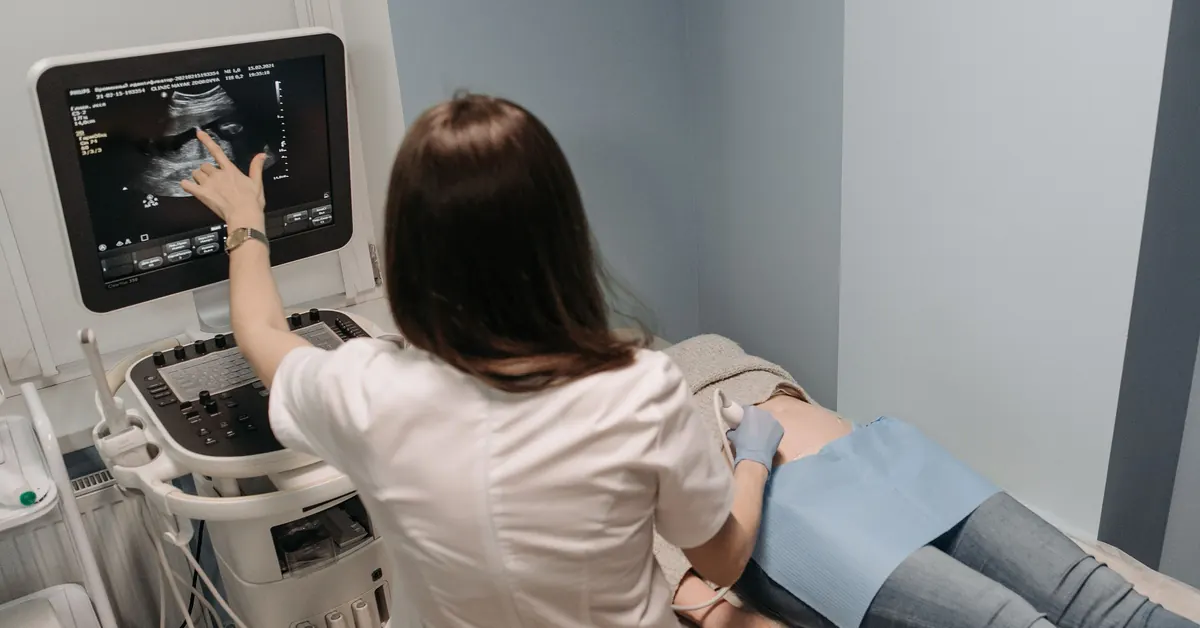
People with cirrhosis (advanced scarring of the liver) have a higher risk of developing hepatocellular carcinoma, the most common primary liver cancer. Surveillance means checking the liver with ultrasound at regular intervals, with or without alpha-fetoprotein, to find tumors while they can still be treated with curative intent.[1]
This case differs from the others in this section: it is not one particular person, but an example of a use of ultrasound that does have support, because it targets a specific organ in a well-defined risk group.
What the meta-analysis found
Singal and colleagues (PLoS Medicine, 2014) pooled 47 studies with 15,158 patients with cirrhosis; in 6,284 (41.4%) the cancer was detected through surveillance.[1]
| Measure | Result |
|---|---|
| Early-stage detection | More likely with surveillance (odds ratio 2.08; 95% CI 1.80 to 2.37) |
| Receiving curative treatment | More likely with surveillance (odds ratio 2.24; 95% CI 1.99 to 2.52) |
| Three-year survival | 50.8% with surveillance versus 27.9% without it (odds ratio 1.90; 95% CI 1.67 to 2.17) |
| Three-year survival in the 6 studies that adjusted for lead-time bias | 39.7% with surveillance versus 29.1% without it |
Lead-time bias matters: finding a cancer earlier can lengthen the survival time without the person living longer. That the difference held in the studies that accounted for it gives the result more weight.[1]
The limits of ultrasound in this case
A meta-analysis of 32 studies with 13,367 patients with cirrhosis found that ultrasound detects liver cancer of any stage with 84% sensitivity, but early-stage cancer with only 47% (95% CI 33 to 61%). In the studies that compared them, adding alpha-fetoprotein raised sensitivity for early-stage cancer from 45% to 63%, at the cost of a small loss of specificity.[2]
What does this mean if you do not have cirrhosis?
These results apply to one organ in a group at elevated risk. They contain no evidence about whole-body ultrasound in healthy people. If you live with chronic hepatitis or cirrhosis, ask your doctor about regular liver surveillance. To see how ultrasound compares with MRI, see the imaging page.
Frequently asked questions
How often is surveillance ultrasound done?
The doctor sets the frequency according to risk. The studies reviewed evaluated regular ultrasound surveillance, with or without alpha-fetoprotein.[1]
Does a normal ultrasound rule out liver cancer?
No. Ultrasound alone detects about 47% of early-stage liver cancers in people with cirrhosis.[2]
Does this mean a whole-body ultrasound is useful for everyone?
No. The evidence is for a specific organ in people with cirrhosis, not for whole-body ultrasound in healthy people.[1]
References
- Singal AG, Pillai A, Tiro J. Early detection, curative treatment, and survival rates for hepatocellular carcinoma surveillance in patients with cirrhosis: a meta-analysis. PLoS Med. 2014;11(4):e1001624. Open the source
- Tzartzeva K, Obi J, Rich NE, et al. Surveillance imaging and alpha fetoprotein for early detection of hepatocellular carcinoma in patients with cirrhosis: a meta-analysis. Gastroenterology. 2018;154(6):1706-1718.e1. Open the source
Keep reading
Abdominal aortic aneurysm: the case where a single ultrasound reduced rupture deaths in four trials
The strongest evidence for a preventive ultrasound: four randomized trials with over 134,000 people. What it achieves, what it does not and for whom.
Li-Fraumeni syndrome: the case where full-body MRI and ultrasound were linked to better survival
The strongest support for full-body MRI comes from a very-high-risk group: 89% five-year survival with surveillance versus 60% without it. And its limits.