

Li-Fraumeni syndrome: the case where full-body MRI and ultrasound were linked to better survival
The essentials
- In Li-Fraumeni syndrome (an inherited cancer predisposition caused by TP53 gene variants), a prospective study of 89 carriers found five-year overall survival of 88.8% with surveillance versus 59.6% without it.[1]
- Surveillance found 40 tumors before they caused symptoms in 19 of the 59 carriers under surveillance. The protocol combines yearly full-body and brain MRI with abdominal and pelvic ultrasound every three to four months.[1][2]
- Outside the original study there are limits: in a Manchester cohort (2025), full-body MRI detected 9 of 17 cancers, 7 of them at stage 1 or 2, but 8 cancers appeared between scans. Its sensitivity was 42.9%.[3]
- It is an observational study, not a randomized trial: it points to a benefit but does not prove it conclusively, and it cannot be carried over to people without this condition.[1][4]
The case: people at very high cancer risk
Li-Fraumeni syndrome is an inherited condition, caused by variants in the TP53 gene, that greatly raises the risk of several types of cancer, often at young ages.[5] Because cancer can affect many different organs, it is one of the few settings where a whole-body study has a clear logic. That is why it is the first case in this section and the one with the most support; in Full-body MRI: what it can detect and when the evidence says it helps we review the general picture.
What the Toronto protocol includes
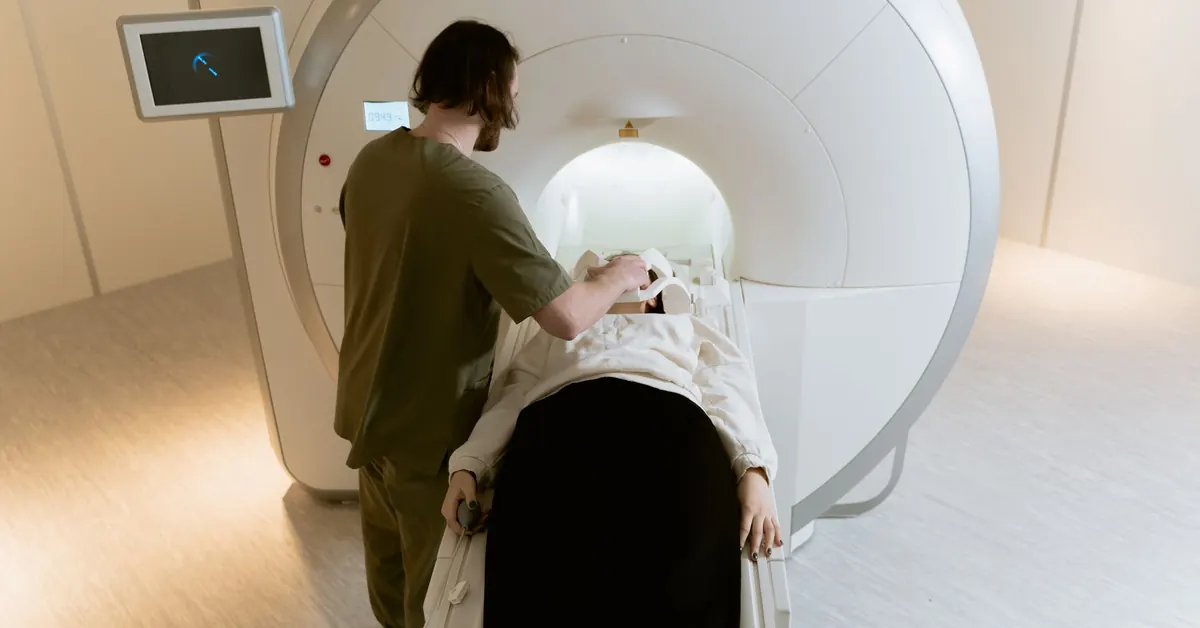
The Toronto protocol, publicized by the Hospital for Sick Children (SickKids), combines blood tests, abdominal and pelvic ultrasound every three to four months, and full-body and brain MRI once a year.[2] In other words, ultrasound and MRI work together: the first checks the abdominal and pelvic organs often, and the second sweeps the whole body less frequently.
What the 2016 study showed
A prospective, observational study followed 89 carriers of TP53 variants at three centers in Canada and the United States. These are its main results:[1][2]
| Measure | With surveillance | Without surveillance |
|---|---|---|
| People | 59 | 30 |
| Tumors | 40 tumors found before symptoms, in 19 people (32%) | Among the 49 who initially declined surveillance, 61 tumors with symptoms in 43 people (88%) |
| Five-year overall survival | 88.8% | 59.6% |
Surveillance was not perfect: two cancers were diagnosed between assessments after false-negative results, and two lesions that were biopsied turned out not to be tumors (false positives).[2]
What happened outside the original study: Manchester, 2025
A center in Manchester, in the United Kingdom, retrospectively reviewed 75 adults with TP53 variants who had a full-body MRI every year between 2012 and 2024: 325 scans in total. Seventeen cancers were diagnosed in 16 people.[3]
- What went well: full-body MRI detected 9 of the 17 cancers, and 7 of those 9 were stage 1 or 2. At the end of follow-up, 5 of these 9 people were alive between 1.8 and 8.6 years after diagnosis.[3]
- What did not: 4 of the 9 people with an MRI-detected cancer died, all within about 3 years of diagnosis; the 2 stage 3 or 4 cancers were sarcomas. In addition, 8 cancers appeared after a normal scan and most were diagnosed late.[3]
- Performance as a stand-alone test: sensitivity 42.9%, specificity 95.5%, negative predictive value 97.4% and positive predictive value 30%.[3]
- Cost of false alarms: 112 of 325 scans (34%) were abnormal; 89 (27.4%) showed benign incidental findings, and they led to 53 additional tests in 46 people, none of which found a cancer.[3]
The authors conclude that full-body MRI is good at ruling cancer out but has modest sensitivity and generates many follow-up tests, and they call for complementary early-detection methods, such as circulating cell-free DNA tests.[3]
How to read these cases
What the data do show is that, in a group at very high baseline risk, finding tumors before symptoms is common and, in many cases, happens at a stage when treatment is possible.[1][3]
What does this mean if you do not have Li-Fraumeni?
These results cannot be carried over to people without an inherited predisposition: with a much lower baseline risk, the balance between finding something and generating findings that do not matter is different. The American College of Radiology does not recommend full-body MRI as screening in people with no symptoms, risk factors or family history.[4] What these scans find in people with no symptoms is explained in What does a full-body MRI find in people with no symptoms?.
At Vilab
If you have a family history of cancer at young ages, the first step is to talk to your doctor about genetic counseling. If your doctor orders an imaging study, the imaging page lets you compare MRI and ultrasound and request a quote on WhatsApp.
Frequently asked questions
Who should consider this protocol?
People with a confirmed TP53 variant, or with a family history suggesting Li-Fraumeni. The decision belongs to a cancer genetics specialist; expert guidelines recommend offering surveillance to people who have the syndrome.[5][6]
Does full-body MRI detect every cancer in these patients?
No. In the Manchester cohort it detected 9 of 17 cancers (sensitivity 42.9%), and 8 cancers appeared between scans.[3]
Do the results apply to the general population?
No. They come from a group at very high inherited risk, and medical societies do not recommend whole-body screening in people with no symptoms or risk factors.[4]
References
- Villani A, Shore A, Wasserman JD, et al. Biochemical and imaging surveillance in germline TP53 mutation carriers with Li-Fraumeni syndrome: 11 year follow-up of a prospective observational study. Lancet Oncol. 2016;17(9):1295-1305. Open the source
- The Hospital for Sick Children (SickKids). "Toronto protocol" dramatically improves survival rates in children at risk of cancer. News release, August 5, 2016. Open the source
- Sodde P, Hyder Z, Pugh S, et al. Evaluation of whole-body MRI for cancer early detection in Li-Fraumeni syndrome. J Med Genet. 2025;62(10):624-627. Open the source
- American College of Radiology. ACR statement on screening total body MRI. April 17, 2023. Open the source
- Kratz CP, Achatz MI, Brugières L, et al. Cancer screening recommendations for individuals with Li-Fraumeni syndrome. Clin Cancer Res. 2017;23(11):e38-e45. Open the source
- Achatz MI, Villani A, Bertuch AA, et al. Update on cancer screening recommendations for individuals with Li-Fraumeni syndrome. Clin Cancer Res. 2025;31(10):1831-1840. Open the source
Keep reading
Full-body MRI: what it can detect and when the evidence says it helps
We reviewed the published studies and guidelines: which risk groups have evidence for full-body MRI, what findings were documented and where its limits are.
Liver cancer in people with cirrhosis: the case where regular ultrasound was linked to longer survival
One of the best-supported uses of ultrasound: watching the liver in people with cirrhosis. What a 47-study meta-analysis showed and why ultrasound alone is not enough.